
Best Shipping for Fragile Items Small Business: Reduce Returns & Damage During Delivery
Best Shipping for Fragile Items Small Business: Reduce Returns & Damage During Delivery
Reduce shipping damage and keep your customers happy! As a small business, every single package you send out is important. When you ship fragile items, the worry of something breaking during its journey can be a big headache. This guide will help you understand the best shipping for fragile items small business, ensuring your products arrive safely.
Nobody wants to deal with damaged goods, especially not your customers. Broken items lead to unhappy buyers, bad reviews, and costly returns. Learning how to properly package and ship fragile goods is key to your success and reputation. We’ll explore strategies to make sure your delicate products reach their destination in perfect condition.
Why Fragile Items Need Extra Love
Shipping fragile items is not like shipping a t-shirt or a book. These products, like ceramics, glass, electronics, or delicate handmade crafts, need special care. If they aren’t protected well, they can easily get bumped, dropped, or crushed during transit. This often results in a damaged item, leading to a frustrating experience for everyone involved.
Think about the journey your package takes from your workshop to your customer’s doorstep. It goes through many hands, conveyor belts, and different vehicles. Each step is a chance for something to go wrong if the item isn’t properly prepared for the adventure. That’s why having a strong fragile shipping strategy is so important for small businesses.
Understanding the Shipping Journey: A Bumpy Road
Your package doesn’t just magically appear at your customer’s door. It travels through a complex network of sorting centers, trucks, and sometimes even airplanes. Each leg of this journey can expose your fragile items to different types of stress. Understanding this process helps you prepare your packages better.
First, your package is loaded onto a truck, often with many other boxes. It might be stacked, shaken, or experience sudden stops. Then, it might go through a sorting facility where machines move it quickly. Finally, it goes into another delivery vehicle, enduring more bumps before reaching its final destination.
Essential Strategies for Shipping Damage Prevention
Preventing damage starts long before the package leaves your hands. It involves careful planning, the right materials, and smart choices. Implementing a robust shipping damage prevention plan is crucial for small businesses dealing with delicate goods. This approach not only saves money but also builds trust with your customers.
By focusing on these strategies, you can significantly lower the risk of breakages. You’ll be taking proactive steps to protect your products and your business. Let’s dive into the core elements of a successful damage prevention strategy.
H3. Packaging Materials: Your First Line of Defense
The right packaging materials are your heroes in the fight against damage. You can’t just throw a fragile item into any box and hope for the best. Using the correct materials provides the cushion and structure needed to protect your products from impacts and vibrations.
Think about the specific needs of your item. Is it heavy, light, oddly shaped, or very delicate? Choosing materials that match these needs is key. Let’s look at the essential components you’ll need.
H4. The Right Box: Strong and Sturdy
Your outer box is the first layer of protection, so it must be strong enough. Always choose a corrugated cardboard box that is new and sturdy, not one that is old or previously used. Used boxes might have lost some of their strength, making them less reliable. Make sure the box is big enough to hold your item with at least two inches of space on all sides for cushioning materials.
A good rule of thumb is to use a double-walled or even triple-walled box for very heavy or extremely fragile items. The stronger the box, the better it can withstand external pressures. Never choose a box that is too large, as your item might shift too much inside, increasing the risk of damage.
H4. Cushioning Materials: The Soft Landing
Cushioning materials fill the empty spaces inside your box and absorb shocks. They stop your item from moving around and protect it from impacts. There are several options, and the best choice depends on your product.
Consider using bubble wrap, packing peanuts, foam inserts, air pillows, or crumpled paper. Each material has its own benefits. For example, bubble wrap is great for wrapping individual items, while packing peanuts fill irregular spaces well.
H5. Bubble Wrap: The Classic Protector
Bubble wrap is a classic for a reason. Its air-filled bubbles provide excellent cushioning against bumps and drops. Wrap your item completely in several layers, making sure all corners and edges are covered. Use strong packing tape to secure the bubble wrap in place.
For extra fragile items, you might want to use large bubble wrap, which has bigger air pockets for more significant impact absorption. Always ensure there’s enough bubble wrap between the item and the box walls. You want at least two inches of cushioning.
H5. Packing Peanuts: Filling the Gaps
Packing peanuts are fantastic for filling odd-shaped voids and creating a uniform cushion around your item. They are lightweight and mold around the product, keeping it centered in the box. Eco-friendly options, made from starch, dissolve in water, which is a great bonus for your environmentally conscious customers.
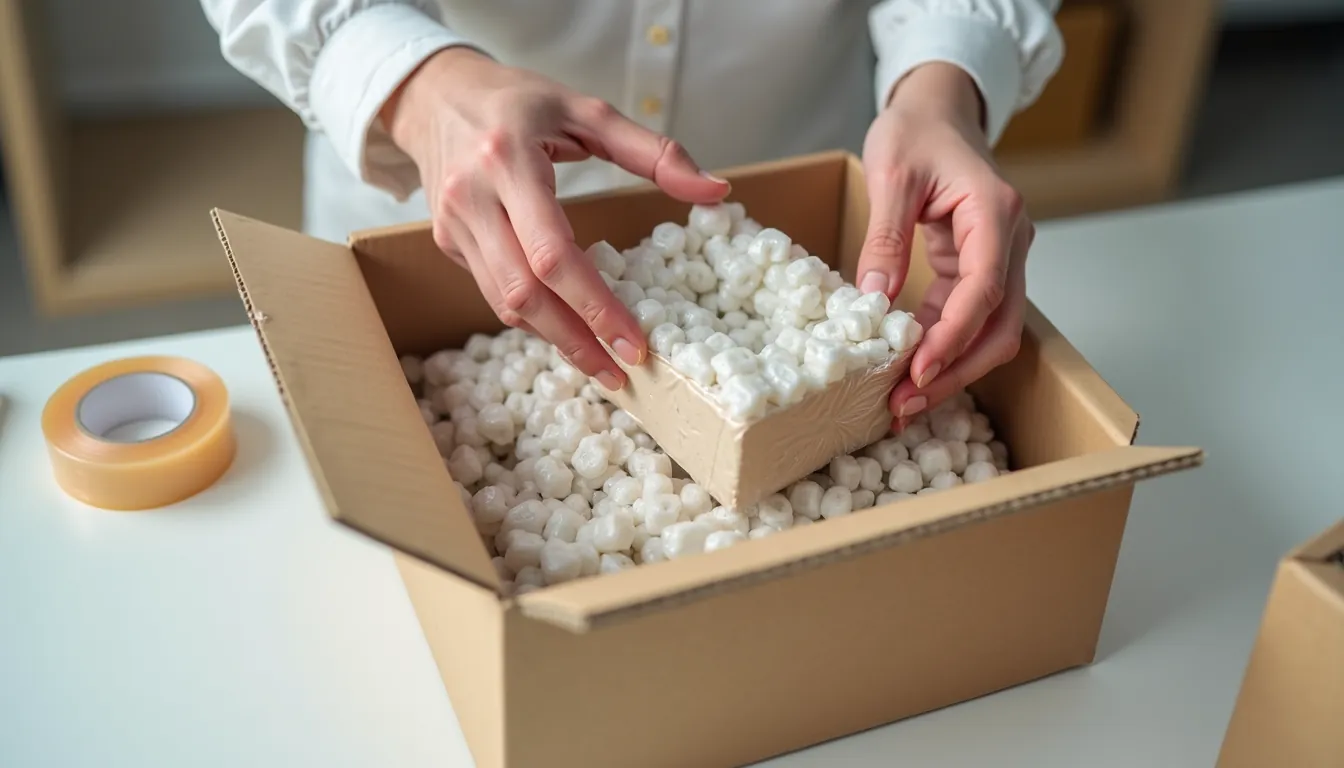
Be generous with packing peanuts! Pour a layer at the bottom of your box, place your wrapped item in the middle, and then fill the rest of the box completely with peanuts. Shake the box gently to settle them, then add more until the item is snug.
H5. Foam Inserts and Air Pillows: Custom Protection
Foam inserts can be custom-cut to fit your product perfectly, providing superior protection. While more expensive, they are ideal for high-value or extremely delicate items. They cradle the product, preventing any movement whatsoever. Air pillows are another excellent option, offering lightweight cushioning.
Air pillows are clean, lightweight, and can be used to brace items within a box. They work well for lighter items where you need to prevent movement. Think about combining different cushioning materials for the best shipping for fragile items small business.
H4. Tapes and Labels: Secure and Informative
Using the right tape is just as important as the right box. Invest in strong, wide packing tape that can withstand the rigors of shipping. Don’t use masking tape, cello tape, or duct tape, as they are not strong enough. Secure all seams of the box, especially the top and bottom flaps.
Clearly label your package as “FRAGILE” on multiple sides. While handlers are supposed to treat all packages with care, a clear “FRAGILE” label can serve as an extra reminder. You can also add “THIS SIDE UP” arrows if the item needs to stay in a specific orientation.
H3. The Art of Packing: Techniques for Success
Knowing your materials is one thing; knowing how to use them is another. The way you pack your fragile items can make all the difference. This is where prevent fragile product damage shipping becomes an art form. You want to create a protective cocoon around your product.
Always pack items individually, even if they are going into the same box. This prevents them from bumping into each other and causing damage. Follow these steps for a foolproof packing process.
H4. The Double Box Method: Extra Security
For very valuable or extremely fragile items, the “box-within-a-box” method is your best friend. This technique provides an additional layer of protection, greatly increasing impact resistance. It’s a key component of effective fragile logistics management.
First, pack your item securely in a smaller box with ample cushioning. Then, place this smaller box inside a larger, sturdier outer box. Fill the space between the two boxes with at least two inches of cushioning material, like packing peanuts or crumpled paper. This creates a crush zone that absorbs shocks.
H4. Suspend Your Item: Floating Protection
Some items benefit from being “suspended” within the packaging. This means they don’t touch the outer walls of the box directly. Think of how some delicate electronics are packed. Foam inserts are perfect for this, creating a custom fit that cradles the item in the center of the box.
When an item is suspended, any impact on the outside of the box is absorbed by the cushioning materials before it reaches the product. This method is especially effective for preventing damage from drops.
H4. Test Your Packaging: The Shake Test
Before sealing your box for good, perform a simple “shake test.” Gently shake the package. If you hear or feel your item shifting inside, you need more cushioning. Your goal is for the item to be snug and silent within the package.
This quick test can save you a lot of trouble later on. A little extra time spent on packing can prevent a lot of headaches from returns and complaints. Make this a standard part of your packing routine for ecommerce delivery damage solutions.
H3. Choosing the Right Shipping Carrier
Not all shipping carriers are created equal, especially when it comes to fragile items. Some carriers have better reputations for handling delicate packages, or they offer specific services that cater to them. Choosing the right carrier is a critical part of the best shipping for fragile items small business.
Research different carriers like USPS, UPS, FedEx, or even specialized freight services for larger items. Look into their specific services for fragile goods, their insurance options, and their tracking capabilities. Don’t just pick the cheapest option; consider the value and fragility of your product.
H4. Carrier Services and Fragile Handling
Most major carriers offer options for special handling of fragile items, often for an additional fee. This might include “Fragile” stickers applied by the carrier or specific sorting processes. Inquire about these services and weigh their cost against the value of your item and the potential cost of damage.
While a “Fragile” label is important, remember that all packages in a standard shipping environment are expected to withstand certain forces. Rely primarily on your excellent packaging, but use carrier services as an extra layer of precaution. You can find more information about carrier services on their official websites, for example, UPS Fragile Guidelines or FedEx Packaging Guidelines. (Note: These are illustrative links; please check for current and relevant links).
H4. Insurance: Protecting Your Investment
Even with the best packaging, accidents can happen. This is where shipping insurance comes in. It provides financial protection in case your item is lost or damaged during transit. For fragile items, especially those of higher value, insurance is almost always a wise investment.
Most carriers offer basic insurance coverage up to a certain amount, usually around $100. For items valued above that, you’ll need to purchase additional coverage. Understand the terms and conditions of the insurance, including what types of damage are covered and the claims process. This is a vital part of your ecommerce return reduction strategy.
H4. Tracking and Delivery Confirmation
Always choose a shipping service that provides tracking information. This allows both you and your customer to monitor the package’s journey. Real-time tracking can help identify if a package is delayed or has encountered issues. Delivery confirmation is also important, especially for valuable items, to confirm the package reached its destination.
Providing tracking numbers proactively to your customers improves their experience and reduces inquiries. If a package is damaged, tracking information can also be crucial for filing an insurance claim.
H3. Fragile Logistics Management: Beyond the Box
Effective fragile logistics management involves more than just good packaging. It’s about optimizing your entire shipping process to minimize risks and manage expectations. From order fulfillment to customer service, every step plays a role.
Thinking holistically about your logistics will streamline your operations and contribute to customer satisfaction. This includes how you process orders, store products, and handle returns.
H4. Streamlining Your Fulfillment Process
An efficient fulfillment process reduces the time your fragile items spend in a warehouse or waiting to be shipped. The less time they spend idle, the less chance there is for accidental damage. Implement a system for quickly and carefully picking, packing, and shipping orders.
Train your staff thoroughly on proper fragile item handling and packaging techniques. Consistency is key when it comes to preventing damage. Develop clear guidelines and checklists for every step of the packing process.
H4. Inventory Storage for Fragile Items
How you store your fragile items before they are packed is also important. Ensure they are stored in a safe, secure, and organized manner. Avoid stacking heavy items on top of fragile ones. Use appropriate shelving and protective coverings if needed.
A well-organized storage area minimizes the risk of items being knocked over or damaged during retrieval. This proactive approach supports your overall fragile shipping strategy.
H3. Ecommerce Return Reduction Strategy: Focus on Damage
A significant portion of ecommerce returns for fragile goods is due to damage. By focusing on shipping damage prevention, you directly impact your ecommerce return reduction strategy. Fewer damaged items mean fewer returns, happier customers, and less cost for your business.
Every return costs your business money, time, and resources. It’s not just the shipping cost; it’s also the labor, the potential loss of the product, and the negative customer experience. Therefore, investing in damage prevention is an investment in reducing returns.
H4. Clear Product Descriptions and Expectations
While not directly packaging-related, clear product descriptions can indirectly reduce returns. Make sure your customers understand exactly what they are buying, including its fragility. Use high-quality photos and detailed descriptions. This helps manage customer expectations, which can prevent disappointment and subsequent returns, even if the item arrives intact.
Honest and transparent communication about the delicate nature of a product can also set a realistic expectation for care during unboxing.
H4. Unboxing Experience and Damage Reporting
Consider how your customer will unbox your product. Make it an enjoyable experience, but also make it easy for them to report damage if it occurs. Include instructions on what to do if the item is damaged upon arrival. Provide clear contact information and steps for filing a claim.
A good ecommerce delivery damage solutions process is empathetic and straightforward. This shows your customers that you care, even when things go wrong. Documenting the damage with photos is usually a requirement for insurance claims.
H3. Prevent Fragile Product Damage Shipping: Detailed Steps
Let’s put it all together into a step-by-step guide to prevent fragile product damage shipping. This comprehensive approach combines all the best practices we’ve discussed. Following these steps diligently will greatly increase the chances of your fragile items arriving safely.
From preparing the item to sealing the box, each step is crucial. Don’t rush any part of the process, especially when dealing with delicate goods.
H4. Step 1: Wrap Each Item Individually
Start by wrapping each fragile item separately. Use multiple layers of bubble wrap, foam sheeting, or craft paper. Secure the wrapping with tape to ensure it doesn’t unravel during transit. For items with protruding parts, give those areas extra padding.
This isolation step is crucial because it prevents items from bumping into each other if you’re shipping multiple things in one box. It’s a foundational element of fragile shipping strategy.
H4. Step 2: Choose the Right-Sized, Sturdy Box
Select a new, corrugated cardboard box that is appropriately sized. Remember, you need at least two inches of space on all sides of your item for cushioning material. For very heavy or extremely fragile goods, opt for double-walled or triple-walled boxes.
Resist the urge to reuse old boxes, as their structural integrity might be compromised. A weak box is a weak defense against shipping hazards.
H4. Step 3: Cushion the Bottom Layer
Place a generous layer of cushioning material at the bottom of the box. This could be packing peanuts, crumpled paper, air pillows, or a foam insert. Aim for at least two to three inches of cushioning to absorb vertical impacts.
This bottom layer acts as a shock absorber, protecting your item from drops or rough landings.
H4. Step 4: Position Your Wrapped Item
Carefully place your individually wrapped item (or items) in the center of the cushioning layer. Make sure the item is not touching the sides of the box. There should be an even gap all around it.
If using the double-box method, this is where you place the smaller, already-packed box into the larger outer box.
H4. Step 5: Fill All Empty Spaces
Completely fill all remaining empty spaces around your item with more cushioning material. Pack peanuts, air pillows, or crumpled paper work well here. Ensure there are no gaps where the item could shift or move.
Shake the box gently to settle the cushioning, then add more if needed. The goal is for the item to be snug and unable to move when the box is closed.
H4. Step 6: Cushion the Top Layer
Add another generous layer of cushioning material on top of your item, filling the box to the brim. This top layer provides protection from impacts from above and helps hold everything in place.
Just like the bottom layer, aim for at least two to three inches of cushioning here.
H4. Step 7: Seal the Box Securely
Close the box flaps and seal all seams with strong packing tape. Use the “H” method, taping along the middle seam and then across the two side seams to create a secure seal. Repeat on the bottom of the box.
Do not skimp on tape; a securely sealed box is less likely to open during transit, exposing your fragile contents.
H4. Step 8: Label Clearly and Accurately
Attach a clear, legible shipping label with the correct address information. Crucially, apply “FRAGILE” labels on multiple sides of the box. You might also add “THIS SIDE UP” arrows if orientation is critical for your product.
While not a guarantee, these labels serve as a visual cue to handlers. Consider bright, eye-catching labels.
H3. Ecommerce Delivery Damage Solutions: What If It Happens?
Even with the best precautions, damage can sometimes occur. Having a clear plan for ecommerce delivery damage solutions is essential for maintaining customer satisfaction and protecting your business. How you handle a damaged delivery can turn a negative experience into a positive one.
Being prepared for this scenario shows professionalism and helps you manage the situation effectively. A quick and fair resolution can actually build customer loyalty.
H4. Respond Promptly and Empathetically
When a customer reports a damaged item, respond quickly and empathetically. Acknowledge their frustration and apologize for the inconvenience. Let them know you understand and are there to help resolve the issue.
A swift and kind response can de-escalate the situation and prevent a negative review. Remember, the customer is likely upset, and your gentle handling of the situation is key.
H4. Gather Information and Photos
Request photos of the damaged item and the packaging. This is crucial for filing an insurance claim with the shipping carrier. Ask for pictures from different angles, including the box, the internal packaging, and the damaged product itself.
Having clear documentation is vital for your claim and for understanding if there are any patterns in damage that you need to address in your packaging.
H4. Offer a Solution: Replace, Refund, or Discount
Once you’ve confirmed the damage, offer a clear solution to your customer. Options include:
- Replacement: Send a new, identical item (if available) with expedited shipping.
- Full Refund: Refund the full purchase price, including shipping.
- Partial Refund/Discount: Offer a discount if the damage is minor and the customer is willing to keep the item.
Allow the customer to choose their preferred resolution if possible. This empowers them and makes them feel valued.
H4. Follow Through on Insurance Claims
Initiate the insurance claim with your shipping carrier as soon as possible. Provide all necessary documentation, including customer photos, tracking information, and proof of value. Keep the customer informed about the progress of the claim if it affects their resolution.
The faster you file, the faster you can potentially be reimbursed for your loss. This is part of a strong ecommerce return reduction strategy.
Developing a Strong Fragile Shipping Strategy
A robust fragile shipping strategy is an ongoing process of learning, adapting, and improving. It’s not a one-time fix but a commitment to excellence in delivery. By continuously refining your methods, you ensure the best shipping for fragile items small business operations.
This strategy should be integrated into every aspect of your business, from product design to customer service. It reflects your brand’s commitment to quality and customer satisfaction.
H3. Regular Review and Improvement
Regularly review your shipping performance. Track the number of damaged items, the cost of returns, and customer feedback. Identify patterns or common causes of damage. Are certain items more prone to breaking? Is a particular carrier performing poorly?
Use this data to make informed adjustments to your packaging materials, techniques, or carrier choices. Continuous improvement is key to long-term success.
H3. Training Your Team
If you have employees, ensure they are thoroughly trained on your fragile shipping strategy. Provide clear guidelines, hands-on training, and regular refreshers. Consistency across your team is vital for maintaining high standards.
A well-trained team is your best asset in preventing shipping damage. They are the ones directly handling your products every day.
H3. Customer Communication and Transparency
Be transparent with your customers about your commitment to safe shipping. Share tips for handling fragile packages upon arrival. If you’ve implemented specific eco-friendly packaging, highlight that too. Good communication builds trust.
You can include a small note in the package, or add information to your website’s FAQ or shipping policy page.
Tools and Technology for Better Fragile Shipping
Technology can also play a role in optimizing your fragile shipping process. From smart packaging solutions to shipping software, there are tools designed to help small businesses.
H3. Shipping Software Integration
Integrate shipping software (like Shopify Shipping, ShipStation, Stamps.com) with your ecommerce platform. These tools can help you compare carrier rates, print labels, manage tracking, and streamline your entire shipping workflow. Many even offer easier ways to purchase insurance.
By automating parts of the shipping process, you reduce manual errors and save valuable time.
H3. Smart Packaging and Sensors
For very high-value or extremely delicate items, you might consider smart packaging. Some advanced packaging solutions include sensors that detect drops, impacts, or temperature changes during transit. While often costly, they provide irrefutable proof of mishandling by carriers, aiding in claims.
This might be an advanced solution for some small businesses, but it’s worth knowing about for future scaling or very specific product lines.
Fragile Packaging Cost Calculator
Understanding the cost of your packaging materials is crucial for pricing your products and managing your budget. Use this simple calculator to estimate the packaging costs for your fragile items.
1
2
3
4
5
6
7
8
9
10
11
12
13
14
15
16
17
18
19
20
21
22
23
24
25
26
27
28
29
30
31
32
33
34
35
36
37
38
39
40
41
42
43
44
45
46
47
48
49
50
51
52
53
54
55
56
57
58
59
60
61
62
63
64
65
66
67
68
69
70
71
72
73
74
75
76
77
78
79
80
81
82
83
84
85
86
87
88
89
90
91
92
93
94
95
96
97
98
99
100
101
102
103
104
105
106
107
108
109
110
111
112
113
114
115
116
117
118
119
120
121
122
123
124
125
126
127
128
129
130
131
132
133
134
135
136
137
138
139
140
141
142
143
144
145
146
147
148
149
150
151
152
153
154
155
156
157
158
159
160
161
162
163
164
165
166
167
168
169
170
171
172
173
174
175
176
177
178
179
180
181
182
183
184
185
186
187
188
189
190
191
192
193
194
195
196
197
198
199
200
201
202
203
204
205
206
207
208
<!DOCTYPE html>
<html lang="en">
<head>
    <meta charset="UTF-8">
    <meta name="viewport" content="width=device-width, initial-scale=1.0">
    <title>Fragile Packaging Cost Calculator</title>
    <style>
        body {
            font-family: Arial, sans-serif;
            margin: 20px;
            background-color: #f4f4f4;
            color: #333;
        }
        .calculator-container {
            background-color: #ffffff;
            padding: 25px;
            border-radius: 8px;
            box-shadow: 0 4px 8px rgba(0, 0, 0, 0.1);
            max-width: 500px;
            margin: 20px auto;
        }
        h2 {
            text-align: center;
            color: #2c3e50;
            margin-bottom: 20px;
        }
        .input-group {
            margin-bottom: 15px;
        }
        .input-group label {
            display: block;
            margin-bottom: 5px;
            font-weight: bold;
            color: #555;
        }
        .input-group input[type="number"],
        .input-group select {
            width: calc(100% - 22px);
            padding: 10px;
            border: 1px solid #ddd;
            border-radius: 4px;
            font-size: 16px;
            box-sizing: border-box;
        }
        .input-group input[type="number"]:focus,
        .input-group select:focus {
            border-color: #4CAF50;
            outline: none;
            box-shadow: 0 0 5px rgba(76, 175, 80, 0.3);
        }
        button {
            width: 100%;
            padding: 12px;
            background-color: #4CAF50;
            color: white;
            border: none;
            border-radius: 4px;
            font-size: 18px;
            cursor: pointer;
            transition: background-color 0.3s ease;
            margin-top: 10px;
        }
        button:hover {
            background-color: #45a049;
        }
        .result {
            margin-top: 25px;
            padding: 15px;
            background-color: #e8f5e9;
            border: 1px solid #c8e6c9;
            border-radius: 4px;
            text-align: center;
            font-size: 1.1em;
            color: #2e7d32;
        }
        .result strong {
            color: #1b5e20;
        }
        .add-material-btn {
            background-color: #2196F3;
            margin-top: 5px;
            margin-bottom: 15px;
        }
        .add-material-btn:hover {
            background-color: #1976D2;
        }
        .material-item {
            display: flex;
            align-items: center;
            margin-bottom: 10px;
        }
        .material-item input, .material-item select {
            flex: 1;
            margin-right: 10px;
        }
        .remove-material-btn {
            background-color: #f44336;
            width: auto;
            padding: 8px 12px;
            font-size: 14px;
            margin: 0;
            border-radius: 4px;
        }
        .remove-material-btn:hover {
            background-color: #da190b;
        }
    </style>
</head>
<body>
    <div class="calculator-container">
        <h2>Fragile Packaging Cost Calculator</h2>
        <p>Estimate your packaging material costs per item to ensure safe delivery.</p>

        <div id="materialInputs">
            <div class="material-item">
                <div class="input-group" style="flex: 2;">
                    <label for="materialType_0">Material Type</label>
                    <select id="materialType_0">
                        <option value="bubble_wrap">Bubble Wrap (per foot)</option>
                        <option value="packing_peanuts">Packing Peanuts (per cubic foot)</option>
                        <option value="foam_sheets">Foam Sheets (per sheet)</option>
                        <option value="cardboard_box">Double-Walled Box (per box)</option>
                        <option value="air_pillows">Air Pillows (per 100 count)</option>
                        <option value="custom">Custom Material</option>
                    </select>
                </div>
                <div class="input-group" style="flex: 1;">
                    <label for="unitCost_0">Unit Cost ($)</label>
                    <input type="number" id="unitCost_0" value="0.50" min="0" step="0.01">
                </div>
                <div class="input-group" style="flex: 1;">
                    <label for="unitsUsed_0">Units Used</label>
                    <input type="number" id="unitsUsed_0" value="10" min="0" step="1">
                </div>
                <button type="button" class="remove-material-btn" onclick="removeMaterial(this)">Remove</button>
            </div>
        </div>

        <button type="button" class="add-material-btn" onclick="addMaterial()">Add Another Material</button>

        <button onclick="calculateCost()">Calculate Total Packaging Cost</button>

        <div class="result" id="packagingCostResult">
            Your estimated total packaging cost: <strong>$0.00</strong>
        </div>
    </div>

    <script>
        let materialCount = 1;

        function addMaterial() {
            const materialInputsDiv = document.getElementById('materialInputs');
            const newMaterialItem = document.createElement('div');
            newMaterialItem.className = 'material-item';
            newMaterialItem.innerHTML = `
                <div class="input-group" style="flex: 2;">
                    <label for="materialType_${materialCount}">Material Type</label>
                    <select id="materialType_${materialCount}">
                        <option value="bubble_wrap">Bubble Wrap (per foot)</option>
                        <option value="packing_peanuts">Packing Peanuts (per cubic foot)</option>
                        <option value="foam_sheets">Foam Sheets (per sheet)</option>
                        <option value="cardboard_box">Double-Walled Box (per box)</option>
                        <option value="air_pillows">Air Pillows (per 100 count)</option>
                        <option value="custom">Custom Material</option>
                    </select>
                </div>
                <div class="input-group" style="flex: 1;">
                    <label for="unitCost_${materialCount}">Unit Cost ($)</label>
                    <input type="number" id="unitCost_${materialCount}" value="0.50" min="0" step="0.01">
                </div>
                <div class="input-group" style="flex: 1;">
                    <label for="unitsUsed_${materialCount}">Units Used</label>
                    <input type="number" id="unitsUsed_${materialCount}" value="10" min="0" step="1">
                </div>
                <button type="button" class="remove-material-btn" onclick="removeMaterial(this)">Remove</button>
            `;
            materialInputsDiv.appendChild(newMaterialItem);
            materialCount++;
        }

        function removeMaterial(button) {
            button.closest('.material-item').remove();
            calculateCost(); // Recalculate after removing an item
        }

        function calculateCost() {
            let totalCost = 0;
            const materialItems = document.querySelectorAll('.material-item');

            materialItems.forEach((item, index) => {
                const unitCostInput = item.querySelector(`input[id^="unitCost_"]`);
                const unitsUsedInput = item.querySelector(`input[id^="unitsUsed_"]`);

                const unitCost = parseFloat(unitCostInput.value) || 0;
                const unitsUsed = parseFloat(unitsUsedInput.value) || 0;

                totalCost += unitCost * unitsUsed;
            });

            document.getElementById('packagingCostResult').innerHTML =
                `Your estimated total packaging cost: <strong>$${totalCost.toFixed(2)}</strong>`;
        }

        // Initial calculation on page load
        document.addEventListener('DOMContentLoaded', calculateCost);
    </script>
</body>
</html>
<iframe srcdoc=” <!DOCTYPE html>
Fragile Packaging Cost Calculator
Estimate your packaging material costs per item to ensure safe delivery.
” width=”100%” height=”auto” style=”min-height: 400px; border: 1px solid #ccc; border-radius: 8px;”></iframe>
Frequently Asked Questions (FAQ) about Shipping Fragile Items
You might have more questions about how to best ship your delicate products. Here are some common questions and their answers to further help your small business. These insights will reinforce your ecommerce delivery damage solutions and overall shipping confidence.
This section aims to address practical concerns and common dilemmas faced by small business owners.
H3. Q1: What is the most important thing to remember when shipping fragile items?
The most important thing is excellent internal packaging. No matter how carefully a carrier handles a box, if the item inside isn’t properly cushioned and secured, it will likely break. Always use generous amounts of cushioning material and ensure the item cannot move inside the box. This is the core of shipping damage prevention.
Your item needs a protective barrier on all sides to absorb impacts. Think of it as creating a custom-fit shell for your product.
H3. Q2: Should I always use a “FRAGILE” sticker? Do carriers actually pay attention to them?
Yes, you should always use a “FRAGILE” sticker. While carriers are supposed to treat all packages with care regardless of the label, a “FRAGILE” sticker serves as an important visual cue to handlers. It’s an extra layer of communication that can encourage more gentle handling. However, do not rely solely on the sticker; your packaging must be robust enough to withstand standard shipping conditions.
The sticker complements, but does not replace, good packaging practices. It’s part of a comprehensive fragile shipping strategy.
H3. Q3: Is shipping insurance worth it for every fragile item?
For most fragile items, especially those with significant value, shipping insurance is definitely worth it. The small cost of insurance can save you from a much larger financial loss if an item is damaged or lost. Many carriers include basic insurance, but you’ll often need to purchase additional coverage for higher-value goods.
It’s a key part of your ecommerce return reduction strategy because it covers your costs when a damaged item leads to a refund or replacement. Always read the policy details carefully.
H3. Q4: What’s the best way to handle customer complaints about damaged goods?
Handle customer complaints about damaged goods with empathy and efficiency. Respond quickly, apologize for the issue, and request photos of the damage for documentation. Then, offer a clear resolution like a replacement or a full refund. Making the process as smooth as possible turns a negative experience into a chance to show excellent customer service.
A prompt and fair resolution is a powerful ecommerce delivery damage solution. It can even turn a frustrated customer into a loyal one.
H3. Q5: Can I reuse packaging materials to save costs for fragile items?
While reusing packaging materials like boxes or bubble wrap can save costs, it’s generally not recommended for fragile items. Used boxes may have lost structural integrity, and reused bubble wrap or peanuts might have compressed or lost their cushioning ability. For fragile items, new, sturdy materials offer the best protection.
If you must reuse, inspect materials carefully for any damage or weakness. Prioritize safety over cost savings for delicate products to prevent fragile product damage shipping.
H3. Q6: How can I make my fragile packaging more eco-friendly?
You can make your fragile packaging more eco-friendly by using recycled content boxes, biodegradable packing peanuts (made from starch), or paper-based cushioning like crumpled paper or honeycomb paper wraps. Look for suppliers who offer sustainable packaging options. Communicate your eco-friendly efforts to your customers as well!
This approach not only helps the planet but can also be a positive selling point for your brand.
H3. Q7: What is the “double box” method, and when should I use it?
The “double box” method involves packing your fragile item securely in a smaller box with cushioning, and then placing that smaller box inside a larger, sturdier outer box, filling the space between the two with more cushioning. You should use it for extremely fragile, high-value, or very heavy items.
This method provides an extra layer of protection, creating a “crush zone” that effectively absorbs impacts and vibrations, which is excellent for best shipping for fragile items small business.
H3. Q8: How much cushioning material do I really need?
A good rule of thumb is to have at least two to three inches of cushioning material on all sides of your item (top, bottom, and all four sides) between the product and the inner walls of the box. For very heavy or extremely delicate items, you might even need more. The goal is to prevent any movement of the item inside the box and to provide ample shock absorption.
Remember the shake test: if you can hear or feel movement, add more cushioning. This is a core part of prevent fragile product damage shipping.
H3. Q9: Does the weight of a fragile item affect how I should package it?
Yes, the weight of a fragile item absolutely affects packaging. Heavier fragile items require stronger boxes (like double or triple-walled) and denser cushioning materials to prevent crushing. The force of impact for a heavy item is much greater, so the packaging needs to be able to withstand that force. Lighter items might do well with air pillows, but heavier items might need foam inserts or more tightly packed peanuts.
Adjusting your packaging based on weight is a critical aspect of fragile logistics management.
H3. Q10: How do I choose the best carrier for my fragile items?
To choose the best shipping for fragile items small business, consider several factors beyond just price. Look at the carrier’s reputation for handling fragile goods, their specific services for delicate items (and associated costs), their insurance coverage options, and their tracking capabilities. Some carriers might be better for local shipments, while others excel in international transit.
It’s often wise to get quotes from a few different carriers and compare their offerings against the value and fragility of your product.
Conclusion: Your Path to Damage-Free Deliveries
Shipping fragile items doesn’t have to be a source of constant worry for your small business. By understanding the challenges and implementing smart strategies, you can greatly reduce shipping damage and ensure your beautiful products arrive safely. Investing in quality packaging and a thoughtful shipping process is an investment in your business’s reputation and customer loyalty.
Remember, the best shipping for fragile items small business is about a holistic approach: excellent packaging, careful carrier selection, comprehensive insurance, and a robust plan for ecommerce delivery damage solutions. You’ve got this! Your customers will thank you for the extra care you put into their orders, leading to fewer returns and a thriving business.



Leave a comment