
Print on Demand vs Dropshipping for Artists: Which Is Easier to Start?
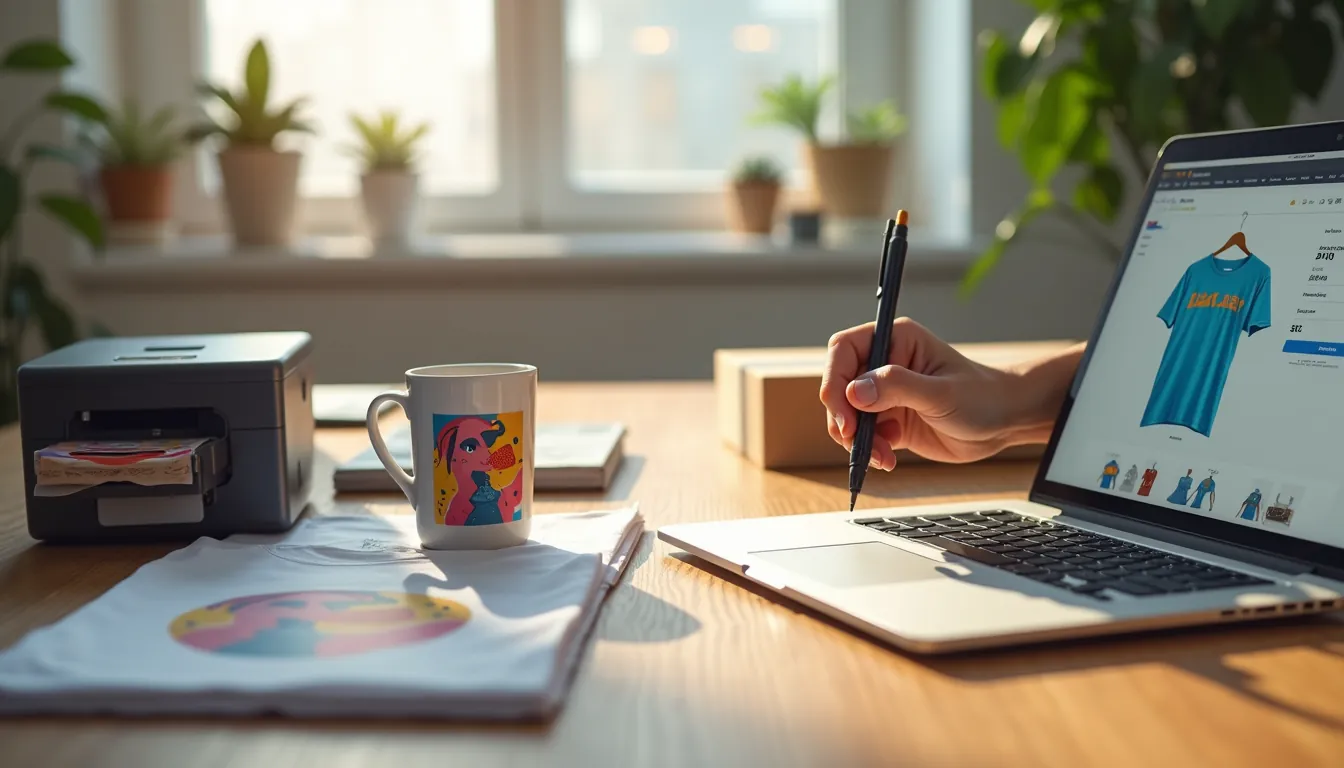
Print on Demand vs Dropshipping for Artists: Which Is Easier to Start?
Starting an art business online might seem tricky at first. Many artists wonder about the easiest art business model to begin with. You want to share your amazing creations with the world and make some money doing it. Luckily, two popular ways let you start selling art online without a lot of hassle: Print on Demand (POD) and Dropshipping.
This guide will help you understand both options clearly. We’ll look at print on demand vs dropshipping for artists, focusing on which one is simpler to get up and running. By the end, you’ll know exactly which path might be best for your art journey. Let’s dive in!
What is Print on Demand (POD) for Artists?
Print on Demand, or POD, is like magic for artists. You create a design, and a special company prints it on items only when a customer buys it. This means you don’t need to hold any products yourself. The company handles printing, packaging, and shipping directly to your customer.
Think of it this way: you upload your awesome artwork to a platform. When someone orders a T-shirt, mug, or poster with your design, the POD company makes that item on the spot. They then send it straight to your customer. This saves you a lot of time and effort.
How Print on Demand Works
The process is quite straightforward for you as an artist. First, you choose a POD service provider like Printful or Printify. Then, you connect this service to your online store, like one you’ve made on Shopify or Etsy. You upload your unique art designs to the POD company’s website.
Next, you pick which products you want your art to appear on. This could be anything from wall art and phone cases to hoodies and tote bags. You set your selling price for each item in your store. When a customer buys something, the order goes to the POD company, they make it, and ship it out.
Benefits of Print on Demand for Artists
POD offers some fantastic perks, especially if you’re just starting. You don’t need to buy a bunch of products upfront. This means no big storage spaces are needed for inventory, which saves you money. It’s a low-risk way to test your designs.
Another great benefit is how easy it makes things. You don’t have to worry about printing quality, packaging materials, or trips to the post office. The POD company does all the heavy lifting for you. This frees up more time for you to create new art.
Challenges of Print on Demand
While POD is great, it has a few downsides. You usually have less control over the final product quality. Since a third party prints your art, you can’t check every item before it goes out. This means you rely on their standards.
Profit margins can sometimes be lower than if you printed items yourself. The POD company charges a base price for each item, and your profit is what’s left after that and platform fees. Shipping times can also vary, which might impact customer satisfaction.
POD Setup Guide: Getting Started with Print on Demand
Starting with Print on Demand is one of the most accessible ways for an artist to begin an online business. Here’s a simple POD setup guide to walk you through the steps. You’ll be ready to sell your art in no time at all. This process is designed to be user-friendly, even for beginners.
Step 1: Choose Your Print on Demand Platform
The first thing you need to do is pick a POD service. Some popular options include Printful, Printify, Gelato, and Redbubble. Research them to see which one fits your needs best. Look at their product range, pricing, and integration options with your chosen store platform.
- Printful: Offers a wide variety of products and excellent integration with many e-commerce platforms. You can learn more about their services here.
- Printify: Known for having a network of print providers, which can give you more options for pricing and locations. Check them out here.
- Redbubble: An all-in-one marketplace where you can upload designs and they handle everything, making it very easy for beginners.
Step 2: Set Up Your Online Store
You need a place for customers to buy your art. This could be your own website or a marketplace. For beginner ecommerce platforms artists, options like Shopify, Etsy, or even an existing social media presence with shopping features are excellent.
- Shopify: Great for building a professional, branded store. It integrates well with most POD services. You can start a free trial to explore it.
- Etsy: Perfect for artists looking to sell handmade or unique items. It has a built-in audience of buyers looking for art.
- WooCommerce: If you have a WordPress website, WooCommerce is a powerful free plugin to turn it into an online store.
Step 3: Connect Your POD Platform to Your Store
Most POD services have easy-to-use integrations. If you chose Shopify, you’d install the Printful or Printify app from the Shopify App Store. This connects your store directly to their system. Orders will automatically go from your store to your POD provider.
This step simplifies your workflow a lot. You won’t have to manually send order details. It makes managing your business much smoother.
Step 4: Upload Your Art Designs
Now comes the fun part: uploading your amazing artwork! Make sure your designs are high-resolution and meet the POD company’s specifications. They usually have clear guidelines for image size and format. You’ll place your designs on different products, like T-shirts, mugs, or canvas prints.
Experiment with different products to see what your art looks best on. Consider creating mockups using the POD platform’s tools to show customers how the final product will look. This helps customers visualize your art in real life.
Step 5: Set Your Prices and Publish Products
Once your designs are on the products, it’s time to set your selling prices. Remember, your profit is the selling price minus the POD company’s base cost and any platform fees. Make sure your prices are fair to you and attractive to your customers.
After setting prices, publish your products in your online store. They are now live and ready for customers to buy! You can then start promoting your store and designs. This step completes your initial POD setup guide.
What is Dropshipping for Artists?
Dropshipping is another way to sell products online without holding inventory. While it shares some similarities with POD, there’s a key difference. With dropshipping, you sell existing products from a supplier, rather than products you’ve designed yourself. You become a middleman.
When a customer buys something from your online store, you then purchase that item from a third-party supplier. The supplier then ships the product directly to your customer. You never actually see or touch the product. Your profit is the difference between what the customer paid you and what you paid the supplier.
How Dropshipping Works for Artists (with a twist)
For artists, dropshipping can take a slightly different approach. You might dropship art supplies, frames, or even unique art-related gifts that complement your own artwork. Instead of putting your design on the product, you’re selling products related to art. Imagine selling fancy sketchbooks or professional paint sets.
You find a supplier that sells these items. Then, you list their products on your website. When an order comes in, you forward it to your supplier, pay them for the product, and they ship it. This allows you to offer a broader range of products to your audience without the need for storage.
Benefits of Dropshipping for Artists
The biggest benefit of dropshipping is the sheer variety of products you can offer. You aren’t limited to items that can be printed with your designs. You can sell anything from art tools to home decor, as long as you find a supplier. This allows you to cater to a wider audience.
Just like POD, you don’t need to manage any inventory. This keeps your startup costs low. You can also easily switch up your product offerings based on trends or customer demand. It provides great flexibility for your business.
Challenges of Dropshipping
Dropshipping comes with its own set of hurdles. Quality control can be a major issue. Since you never see the products, you have to trust your supplier completely. Poor quality products or slow shipping can damage your reputation. It’s crucial to find reliable suppliers.
Competition in dropshipping can be very high, especially for popular items. This can make it harder to stand out and attract customers. Returns and customer service can also be more complex, as you’re dealing with a supplier for physical goods.
Dropshipping Startup Process: Your Guide to Beginning
If you’re an artist thinking about offering related products, understanding the dropshipping startup process is essential. It’s a bit different from POD, but still very accessible for beginners. Here’s how you can get started with dropshipping. You’ll build your online store and connect with suppliers.
Step 1: Research and Choose a Niche
Before you do anything else, decide what kind of products you want to sell. As an artist, you might want to dropship art supplies, frames, unique decor, or even merchandise that isn’t print-on-demand related. Choosing a niche helps you target specific customers.
For example, you could focus on eco-friendly art supplies or unique storage solutions for artists. Research what’s popular and what your potential customers might need. This makes marketing much easier in the long run.
Step 2: Find Reliable Suppliers
Finding good suppliers is the most critical part of dropshipping. A good supplier offers quality products, fast shipping, and reliable communication. Platforms like AliExpress (for a wide range of goods) or specific dropshipping apps like Oberlo (for Shopify) can help you find products.
You can also look for suppliers directly by searching online for “dropshipping [product type] suppliers.” Always try to order a sample product first. This lets you check the quality for yourself before selling it to your customers.
Step 3: Build Your Online Store
Just like with POD, you need an online store where customers can browse and buy products. Again, beginner ecommerce platforms artists often choose Shopify or WooCommerce. These platforms make it easy to list products and process orders.
Shopify is especially popular because it has many apps that help with dropshipping, like Oberlo or DSers. These apps let you import products from suppliers directly into your store. Setting up your store with clear product descriptions and nice images is very important.
Step 4: Import Products and Set Prices
Once your store is ready and you have chosen your supplier, it’s time to add products. Dropshipping apps often let you import product photos and descriptions automatically. However, you should always rewrite descriptions to make them unique and engaging.
Set your prices carefully. You need to make enough profit to cover your product cost, shipping (if not charged separately), and marketing. Don’t forget to account for any platform fees. Your price needs to be competitive but also fair to you.
Step 5: Market Your Store
After your products are live, you need to attract customers. Use social media, search engine optimization (SEO), and paid ads to reach your audience. Share your products on platforms where artists and art lovers hang out.
Building a brand story around your dropshipped items can also help. How do these items complement your art or the lifestyle of an artist? This helps you stand out from other dropshippers. This completes your dropshipping startup process.
Print on Demand vs Dropshipping for Artists: A Direct Comparison
Now that you understand both models, let’s directly compare print on demand vs dropshipping for artists. We’ll look at different aspects to help you decide which is easier to start and more suitable for you. This comparison will clarify which easiest ecommerce model for artists might be best.
| Feature | Print on Demand (POD) | Dropshipping |
|---|---|---|
| Product Type | Your custom designs on various blank items | Existing, generic products from a supplier |
| Inventory | None (printed on demand) | None (supplier holds inventory) |
| Upfront Cost | Very low (platform fees, domain name) | Very low (platform fees, domain name) |
| Design Control | Full control over your art designs | No design control (selling existing products) |
| Product Quality | Relies on POD provider’s quality control | Relies heavily on dropshipping supplier’s quality |
| Branding | Strong branding possible (your art is the brand) | Can be harder to brand uniquely (generic products) |
| Supplier Choice | Limited to POD providers (Printful, Printify, etc.) | Wide range of suppliers for various products |
| Profit Margins | Variable, often lower due to base product cost | Variable, depends on supplier cost and market price |
| Time Investment | More time for design creation, less for fulfillment | More time for supplier research, less for design |
| Learning Curve | Easy, focus on design and marketing | Easy, focus on product research, supplier vetting, marketing |
| Market Relevance | Direct for artists selling their own work | Indirect, selling art-related or complementary products |
Ease of Setup
Both models are quite easy to set up, especially compared to traditional retail. For Print on Demand, your main focus is creating great art and picking products to put it on. The technical setup of connecting your store to a POD service is often simple. Many services offer step-by-step guides.
Dropshipping requires you to find good products and reliable suppliers, which can take time. You also need to import these products into your store. While easy, finding the right products and suppliers can be a bit more involved. For artists focused purely on their own creations, POD is slightly simpler in terms of product creation.
Upfront Costs
This is where both POD and dropshipping shine. They are both excellent for beginner artist ecommerce because they require very little money to start. You don’t need to buy any inventory. Your main costs will be for your e-commerce platform subscription (like Shopify) and possibly a domain name for your website.
Sometimes, you might pay for marketing tools or design software. But generally, you can start with a very small budget. This makes both models very attractive if you have limited funds.
Product Variety
Dropshipping generally offers a much wider range of products. You can dropship almost anything you can find a supplier for. This means you could sell art supplies, home decor, or even gadgets. If you want to offer a broad selection of items, dropshipping wins.
Print on Demand, however, is limited to items that can be printed on. While this includes many things like apparel, mugs, and wall art, it won’t include, for example, a specific type of paint brush. POD is specifically for your designs on products.
Control and Branding
With Print on Demand, you have full control over your art and its appearance on products. Your brand is built around your unique designs. This means you can create a very strong, personal brand image. Customers are buying your art.
In dropshipping, you are selling existing products. While you can brand your store, the products themselves often come from various suppliers and may not have a consistent look. It can be harder to create a strong, unique brand identity solely based on the products.
Profit Margins
Profit margins can vary greatly in both models. In POD, the base cost of the item from the printer affects your profit. If a T-shirt costs $10 to print and you sell it for $25, you make $15 (minus any platform fees). The more unique and sought-after your art, the higher you can price your items.
Dropshipping margins depend on how cheap you can get the product from the supplier and how much you can sell it for. Highly competitive products might have thin margins. Unique or hard-to-find dropshipped items can yield better profits. It often requires more research to find profitable products.
Time Commitment
The time commitment also differs. For POD, you’ll spend a lot of time creating new art and designing how it looks on different products. Once set up, fulfilling orders is mostly automated. You focus on design and marketing.
For dropshipping, you spend more time researching products and vetting suppliers. You also need to stay on top of supplier inventory and pricing changes. Customer service, especially dealing with product issues, might take more of your time.
Which Is Easier to Start?
When comparing print on demand vs dropshipping for artists, Print on Demand generally comes out on top as the easiest ecommerce model for artists to start.
Here’s why:
- Directly related to your core skill: As an artist, your main job is to create art. POD lets you leverage this skill directly. You don’t need to learn a new skill like product sourcing.
- Less complex product research: You’re not searching for existing products; you’re creating the core product (your art). You only need to choose blank items to put it on.
- Stronger personal brand from day one: Your art is the product, making branding very natural and powerful. Customers connect with you as the artist.
- Fewer supplier issues: You typically deal with one or two main POD providers, simplifying communication and quality control compared to multiple dropshipping suppliers.
For a beginner artist ecommerce venture, POD removes many complex logistical challenges. You can focus purely on your creative process and marketing your unique vision. This makes it simpler to get your first sales and build momentum.
Artist’s E-commerce Profit Estimator
Let’s say you’re an artist trying to figure out how much money you could make. Use this simple calculator to compare potential profits for a single product using Print on Demand versus Dropshipping. This will give you an idea of which model might be more financially rewarding for your chosen items.
Instructions: Enter the selling price of your product, the base costs for POD and Dropshipping, and any shipping charges. The calculator will estimate your gross profit per sale for each model.
1
2
3
4
5
6
7
8
9
10
11
12
13
14
15
16
17
18
19
20
21
22
23
24
25
26
27
28
29
30
31
32
33
34
35
36
37
38
39
40
41
42
43
44
45
46
47
48
49
50
51
52
53
54
55
56
57
58
59
60
61
62
63
64
65
66
67
68
69
70
71
72
73
74
75
76
77
78
79
80
81
82
83
84
85
86
87
88
89
90
91
92
93
94
95
96
97
98
99
100
101
102
103
104
105
106
107
108
109
110
111
112
113
114
115
116
117
118
119
120
121
122
123
124
125
126
127
128
129
<style>
    .calculator-container {
        font-family: Arial, sans-serif;
        max-width: 600px;
        margin: 20px auto;
        padding: 20px;
        border: 1px solid #ccc;
        border-radius: 8px;
        background-color: #f9f9f9;
    }
    .calculator-container h4 {
        text-align: center;
        color: #333;
        margin-bottom: 20px;
    }
    .input-group {
        margin-bottom: 15px;
    }
    .input-group label {
        display: block;
        margin-bottom: 5px;
        font-weight: bold;
        color: #555;
    }
    .input-group input[type="number"] {
        width: calc(100% - 22px);
        padding: 10px;
        border: 1px solid #ddd;
        border-radius: 4px;
        box-sizing: border-box;
    }
    .results {
        margin-top: 25px;
        border-top: 1px solid #eee;
        padding-top: 15px;
    }
    .results p {
        font-size: 1.1em;
        margin-bottom: 10px;
        color: #333;
    }
    .results p strong {
        color: #007bff;
    }
    .button-group {
        text-align: center;
        margin-top: 20px;
    }
    .button-group button {
        background-color: #007bff;
        color: white;
        padding: 10px 20px;
        border: none;
        border-radius: 5px;
        cursor: pointer;
        font-size: 1em;
    }
    .button-group button:hover {
        background-color: #0056b3;
    }
</style>

<div class="calculator-container">
    <h4>Artist's E-commerce Profit Estimator</h4>
    <p>Use this tool to compare potential profits for a single product with Print on Demand vs. Dropshipping.</p>

    <div class="input-group">
        <label for="sellingPrice">Your Selling Price per Product ($):</label>
        <input type="number" id="sellingPrice" value="30" min="0" step="0.01">
    </div>

    <div class="input-group">
        <label for="podBaseCost">Print on Demand (POD) Base Cost per Product ($):</label>
        <input type="number" id="podBaseCost" value="15" min="0" step="0.01">
    </div>

    <div class="input-group">
        <label for="dropshipProductCost">Dropshipping Product Cost from Supplier ($):</label>
        <input type="number" id="dropshipProductCost" value="10" min="0" step="0.01">
    </div>

    <div class="input-group">
        <label for="dropshipSupplierShipping">Dropshipping Supplier Shipping Cost to Customer (if separate, $):</label>
        <input type="number" id="dropshipSupplierShipping" value="5" min="0" step="0.01">
        <small>This is what your supplier charges you for shipping.</small>
    </div>

    <div class="input-group">
        <label for="myCustomerShipping">Your Shipping Charge to Customer (if you charge customer for shipping, $):</label>
        <input type="number" id="myCustomerShipping" value="0" min="0" step="0.01">
        <small>This is what you charge your customer. If 0, it means you offer free shipping.</small>
    </div>

    <div class="button-group">
        <button onclick="calculateProfit()">Calculate Profits</button>
    </div>

    <div class="results">
        <p>Estimated Gross Profit (Print on Demand): <strong id="podProfit">$0.00</strong></p>
        <p>Estimated Gross Profit (Dropshipping): <strong id="dropshipProfit">$0.00</strong></p>
    </div>
</div>

<script>
    function calculateProfit() {
        const sellingPrice = parseFloat(document.getElementById('sellingPrice').value);
        const podBaseCost = parseFloat(document.getElementById('podBaseCost').value);
        const dropshipProductCost = parseFloat(document.getElementById('dropshipProductCost').value);
        const dropshipSupplierShipping = parseFloat(document.getElementById('dropshipSupplierShipping').value);
        const myCustomerShipping = parseFloat(document.getElementById('myCustomerShipping').value);

        if (isNaN(sellingPrice) || isNaN(podBaseCost) || isNaN(dropshipProductCost) || isNaN(dropshipSupplierShipping) || isNaN(myCustomerShipping)) {
            alert("Please enter valid numbers for all fields.");
            return;
        }

        // POD Profit: (Your Selling Price + Your Shipping Charge to Customer) - POD Base Cost
        const podGrossProfit = (sellingPrice + myCustomerShipping) - podBaseCost;

        // Dropshipping Profit: (Your Selling Price + Your Shipping Charge to Customer) - (Dropshipping Product Cost + Dropshipping Supplier Shipping Cost)
        const dropshipGrossProfit = (sellingPrice + myCustomerShipping) - (dropshipProductCost + dropshipSupplierShipping);

        document.getElementById('podProfit').textContent = `$${podGrossProfit.toFixed(2)}`;
        document.getElementById('dropshipProfit').textContent = `$${dropshipGrossProfit.toFixed(2)}`;
    }

    // Calculate on initial load with default values
    document.addEventListener('DOMContentLoaded', calculateProfit);
</script>
Key Factors for Artists to Consider
When you’re deciding between POD and dropshipping, think about your unique situation. Every artist is different, and what works for one might not work for another. You need to pick the path that feels right for you and your art business. Consider these points carefully.
Your Art Style and Products
Does your art lend itself well to being printed on various items? If you create patterns, illustrations, or designs that look good on T-shirts, mugs, and phone cases, POD is a natural fit. If your art is highly textured, sculptural, or very delicate, POD might not be the best direct translation.
However, you could dropship custom frames for your original art. Or, you could sell art supplies related to your specific technique. Think about how your art or related items would appeal to your audience.
Your Time Availability
How much time do you have to manage your online store? If you’re short on time and want to focus mostly on creating art, POD is often more hands-off after the initial setup. Orders are fulfilled automatically, freeing you up.
Dropshipping can require more active management, especially in finding new products and dealing with potential supplier issues. You’ll spend time ensuring your suppliers are reliable. Both require marketing effort, but the day-to-day operations can differ.
Your Budget
Both models are low-cost to start, which is excellent for any beginner artist ecommerce. However, if you are extremely tight on budget, free marketplaces like Redbubble (for POD) or a basic Shopify plan might be your best bet. Remember, investing a little in a professional store can pay off in the long run.
Your budget will also influence how much you can spend on marketing. Marketing is essential for both models. Free options like social media marketing are always available.
Your Desire for Control
How much do you want to control the final product? With POD, you control the design, but less so the printing and physical product quality. You rely on your chosen POD provider’s standards. This is a trade-off for convenience.
With dropshipping, you have even less control over the product itself, as you’re selling pre-made items. Your control shifts to choosing reputable suppliers. If quality control is your top priority, you might prefer making things yourself, but that’s a different business model entirely.
Your Technical Skills
Are you comfortable setting up a basic website or using e-commerce platforms? Both POD and dropshipping often involve connecting apps or setting up integrations. Fortunately, beginner ecommerce platforms artists use today are very user-friendly.
Platforms like Shopify are designed for people with no coding experience. They offer drag-and-drop builders and app stores. If you can use social media, you can likely handle these platforms. Many tutorials are available to guide you.
Beginner Ecommerce Platforms for Artists
Choosing the right platform is a big step when you start selling art online. Luckily, there are many user-friendly options perfect for beginner ecommerce platforms artists. These platforms make it simple to showcase your work and manage your sales. Here are a few top choices that support both POD and dropshipping.
Shopify
Shopify is incredibly popular for a reason. It’s an all-in-one e-commerce solution that’s very powerful yet easy to use. You can build a beautiful, professional online store without any coding. Shopify integrates seamlessly with almost all major Print on Demand services like Printful and Printify.
It also has a vast app store with many dropshipping apps, like DSers or Zendrop. This makes it perfect if you want to try both models. Shopify offers excellent customer support and many resources to help you succeed. It’s a fantastic choice for building a serious art business.
Etsy
Etsy is a marketplace specifically for handmade, vintage, and craft items. It’s a fantastic place for artists because it has a built-in audience actively looking for unique art. Setting up an Etsy shop is very easy, often easier than a full website.
You can use Etsy for Print on Demand by connecting it to services like Printful. While direct dropshipping of generic items might be against Etsy’s handmade policy, selling your designs on POD products is generally accepted. It’s a great platform to get your first sales quickly.
WooCommerce (for WordPress Users)
If you already have a website built with WordPress, WooCommerce is an excellent option. It’s a free plugin that turns your WordPress site into a fully functional online store. WooCommerce is very flexible and customizable. You can integrate it with POD services using specific plugins.
For dropshipping, there are also various WooCommerce dropshipping plugins available. While it might have a slightly steeper learning curve than Shopify for absolute beginners, it offers immense control if you’re comfortable with WordPress. It’s a powerful tool for those wanting full ownership of their site.
Dedicated POD Marketplaces (e.g., Redbubble, Society6)
Platforms like Redbubble and Society6 are perfect for the absolute beginner artist. You simply upload your designs, and they handle everything else – the products, the printing, the shipping, and even marketing to their existing audience. You just earn a commission.
These are the absolute easiest ecommerce model for artists to start with, as they require no website setup. However, you have less control over your branding and customer relationships. They are great for testing designs or earning some passive income.
Tips for Success in Either Model
No matter if you choose Print on Demand or Dropshipping, success won’t happen by accident. You need a good strategy and a willingness to learn. Here are some universal tips to help you thrive as an artist selling online.
Create High-Quality Designs
For POD, your art is your product. Invest time in creating unique, beautiful, and high-resolution designs. Customers are buying your creativity. Make sure your designs look great on all the products you offer.
Find Reliable Suppliers (Especially for Dropshipping)
If you dropship, your business relies on your suppliers. Spend time researching and vetting them. Look for suppliers with good reviews, quick shipping times, and excellent product quality. Always try to order samples.
Focus on Marketing Your Art
No one will buy your art if they don’t know it exists. Use social media, build an email list, and consider paid advertising. Share your creative process, tell your story, and connect with your audience. Effective marketing is crucial to start selling art online.
Provide Excellent Customer Service
Happy customers are repeat customers. Be responsive to inquiries, transparent about shipping times, and handle any issues professionally. Good customer service builds trust and reputation. This is especially important when you rely on third parties for fulfillment.
Build Your Brand
Even if you’re using POD or dropshipping, you can still build a strong brand. Use consistent branding across your website, social media, and packaging (if available). Your brand story helps you stand out and connect with your audience emotionally.
Be Patient and Persistent
Building an online art business takes time and effort. Don’t get discouraged if sales don’t pour in immediately. Keep creating, keep learning, and keep trying new marketing strategies. Persistence is key to long-term success.
Conclusion
Deciding between Print on Demand and Dropshipping for your art business is a big step. Both are excellent low-cost ways to start selling art online without inventory. For artists specifically looking for the easiest ecommerce model for artists to start, Print on Demand often holds a slight edge. It directly uses your core skill – creating art – and handles many of the logistics automatically.
POD allows you to focus on your designs and building a strong personal brand around your artwork. The POD setup guide is straightforward, helping you get up and running quickly. While dropshipping offers incredible product variety, its dropshipping startup process can involve more research into products and suppliers.
Ultimately, the best choice depends on your specific goals, your art, and how much time you want to spend creating versus managing products. Whichever path you choose, remember that consistency, quality, and good marketing are your keys to success. Take that first step, and good luck on your beginner artist ecommerce journey!
Frequently Asked Questions (FAQ)
Q1: Do I need a website to start Print on Demand or Dropshipping?
A: While not strictly required for some POD marketplaces like Redbubble, having your own website (e.g., on Shopify or Etsy) gives you more control and a professional image. It helps you build your brand. Most artists find a dedicated store beneficial for long-term growth.
Q2: What are typical profit margins for Print on Demand for artists?
A: Profit margins for Print on Demand typically range from 15% to 40% or more, depending on your product, your chosen POD provider, and your selling price. More unique or desirable art can command higher prices and thus higher margins. It’s crucial to price your items wisely to ensure a healthy profit after base costs and fees.
Q3: How much money do I need to start an art e-commerce business?
A: You can start with very little! For both POD and dropshipping, you could begin with as low as $20-$50 for a basic domain name and a monthly e-commerce platform subscription (like Shopify’s basic plan, which often has a free trial). Marketing can be done for free using social media. The easiest ecommerce model for artists allows you to grow without a huge initial investment.
Q4: Can I do both Print on Demand and Dropshipping at the same time?
A: Yes, many artists combine both models. You could sell your custom art prints and apparel via Print on Demand, while also dropshipping related art supplies or unique studio decor items. Using a platform like Shopify makes it easy to manage both types of products from one store. This allows you to offer a broader range to your audience.
Q5: Is Print on Demand really the easiest e-commerce model for artists?
A: For most artists, yes, Print on Demand is considered the easiest ecommerce model for artists to start. It directly leverages your existing artistic skills without requiring you to handle inventory, shipping, or manufacturing. The focus remains on creation and marketing, which aligns well with an artist’s strengths. The POD setup guide is usually straightforward and quick to implement.
Q6: How do I find reliable dropshipping suppliers?
A: You can find dropshipping suppliers through various channels. Directories like SaleHoo or Worldwide Brands are good starting points. Apps like Oberlo or DSers integrate directly with Shopify and allow you to find products from AliExpress suppliers. Always vet suppliers by checking reviews, contacting them directly, and ordering product samples to ensure quality and reliability for your dropshipping startup process.
Q7: What are the main risks with each model?
A: For Print on Demand, the main risks include reliance on the POD provider for product quality and shipping times, which can sometimes be inconsistent. For Dropshipping, the primary risks are finding unreliable suppliers (leading to poor product quality or slow shipping), intense competition, and managing complex customer service issues related to third-party products. Both models also require consistent marketing effort to generate sales.
Q8: How important is branding when selling art online?
A: Branding is incredibly important for artists. It helps you stand out, connect with your audience, and build loyalty. With Print on Demand, your art is your brand, making it easier to create a unique identity. Even with dropshipping, a strong brand for your store (through consistent visuals, voice, and curation) helps you differentiate yourself and attract customers. A strong brand helps you start selling art online more effectively.

Leave a comment